— ENGLISH —
Angola 🌍 — From the Kingdom of the Ngola to the First Stamps
Angola takes its name from ngola — the title of the kings of the Ndongo people, a Bantu kingdom in the highlands between the Kwanza and Lukala rivers. Portuguese navigators first reached the Angolan coast in the 1480s, and by 1575 had established a permanent settlement at Luanda, which would grow into one of the most important ports in the Atlantic world — and the centre of one of history's largest slave trades. 🚢 For three centuries, the Portuguese presence was largely confined to the coast; it was only in the late 19th century, following the 1885 Berlin Conference that formally divided Africa among European powers, that Portugal extended effective control over the vast interior.
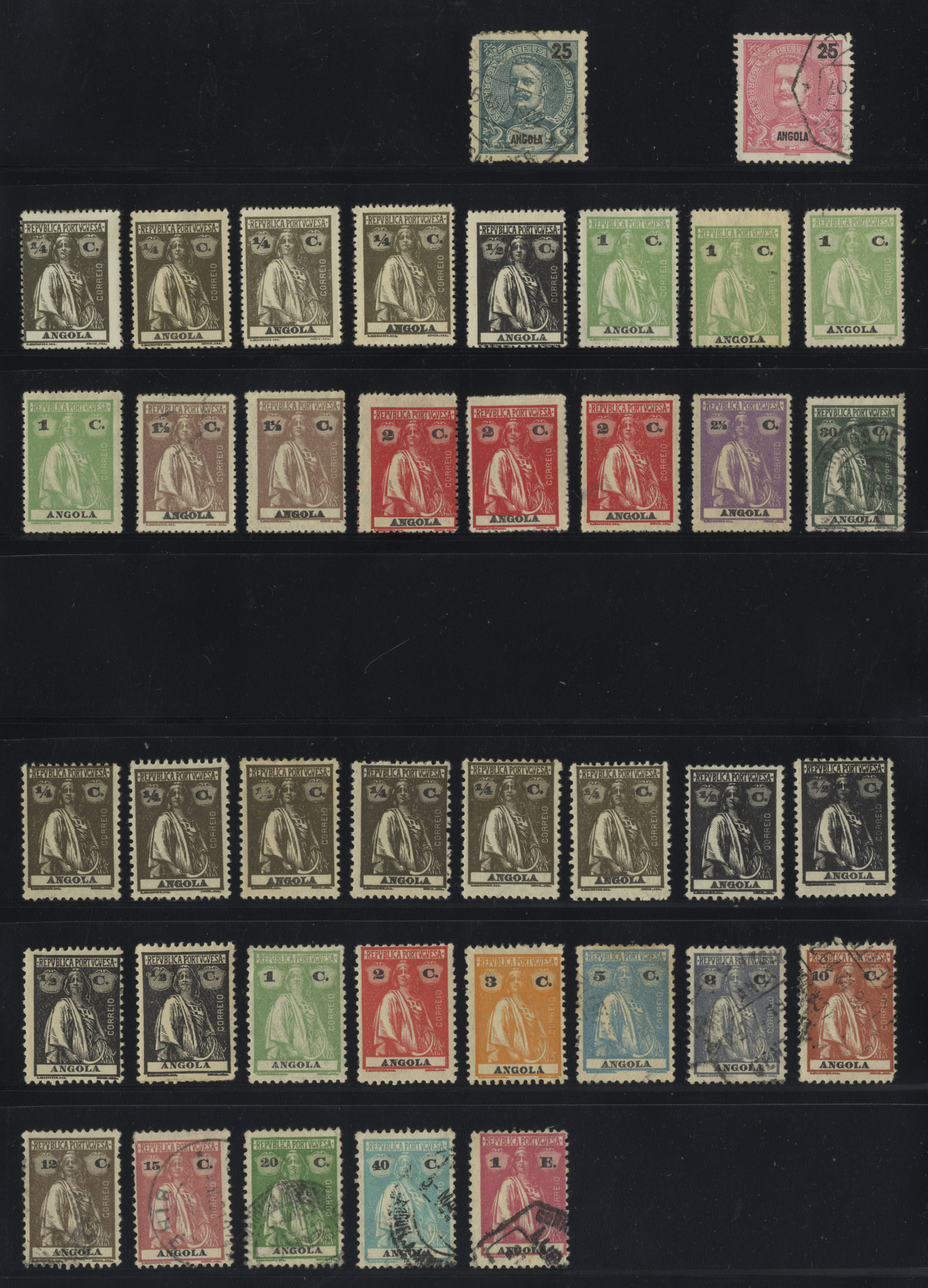
Angola's first stamps appeared in 1870: six typographed values depicting the Portuguese crown, using the same generic design shared across all Portuguese colonies at the time. 📫 New values and colours were added periodically until 1885. In 1886 came nine values with an embossed silhouette of King Luís I, followed by portraits of King Carlos I in 1893 and 1898. The decade following the fall of the Portuguese monarchy in 1910 was philatelically turbulent — a bewildering succession of overprints and surcharges applied to existing stocks, reflecting the political instability of the young republic. The long-running Ceres series of 1914, featuring the Roman goddess of agriculture, brought stability and continuity, with new values added as late as 1926 — 40 types in total, a series recognisable to any collector of Portuguese colonial stamps. ⭐
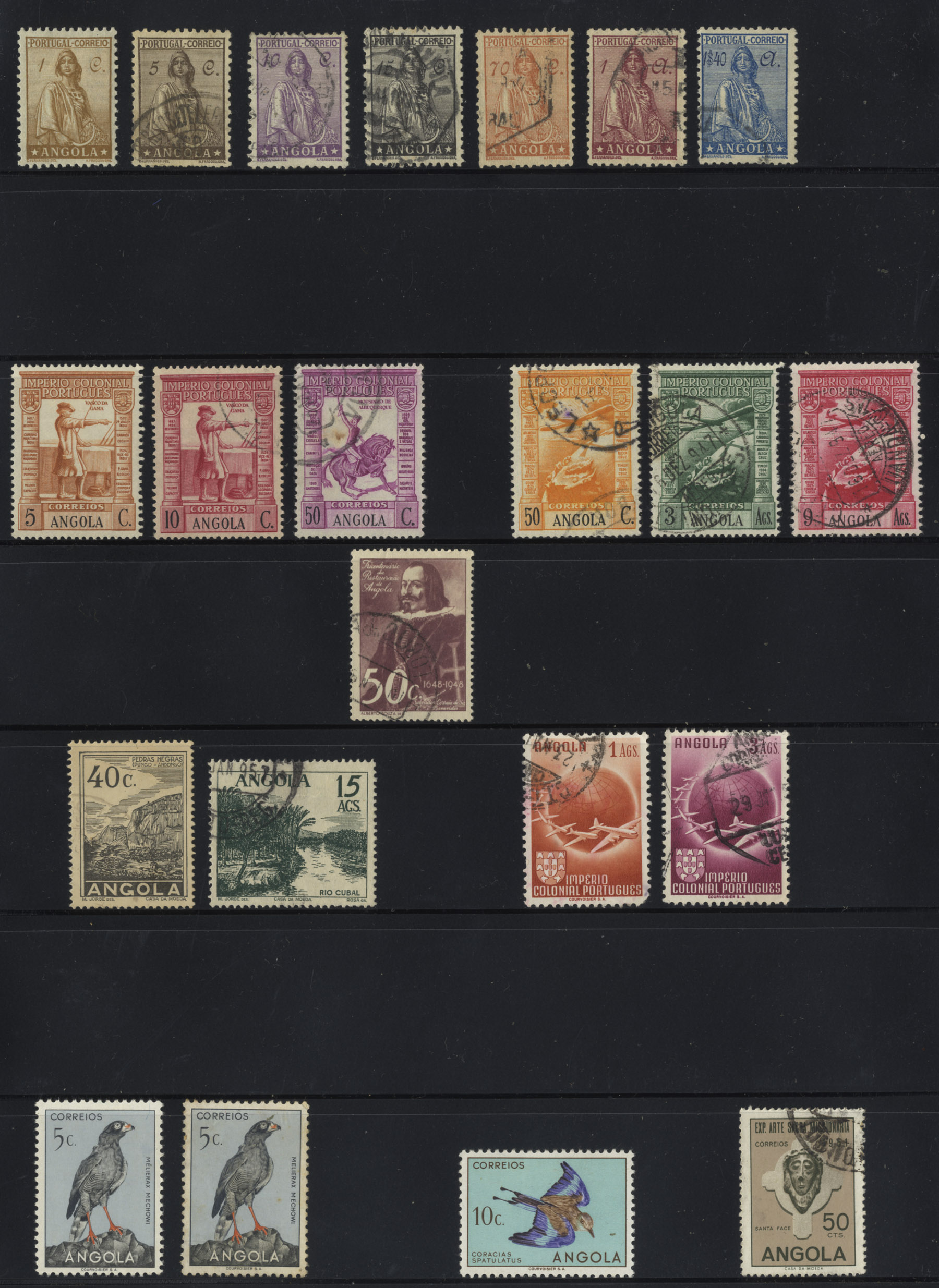
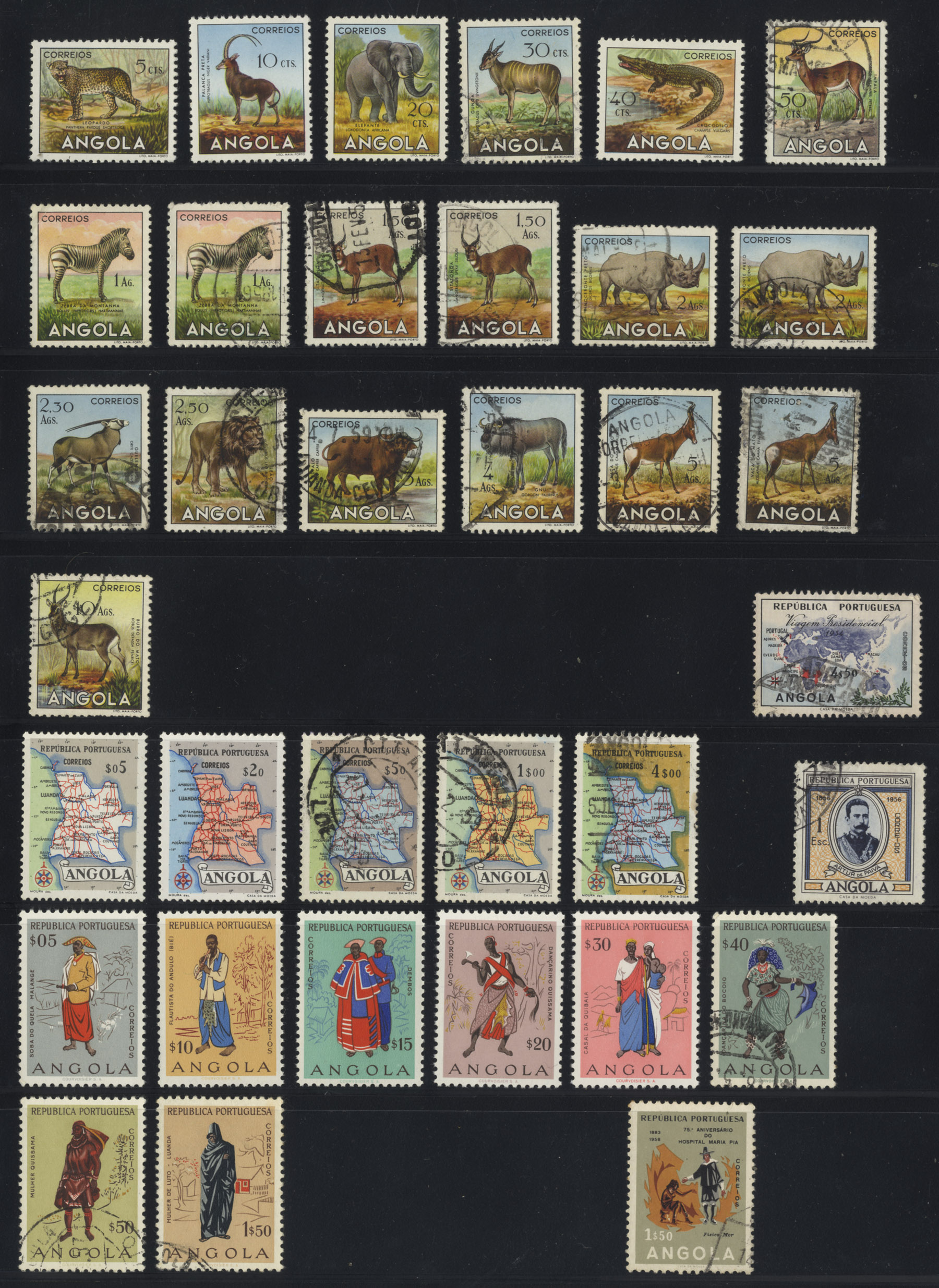
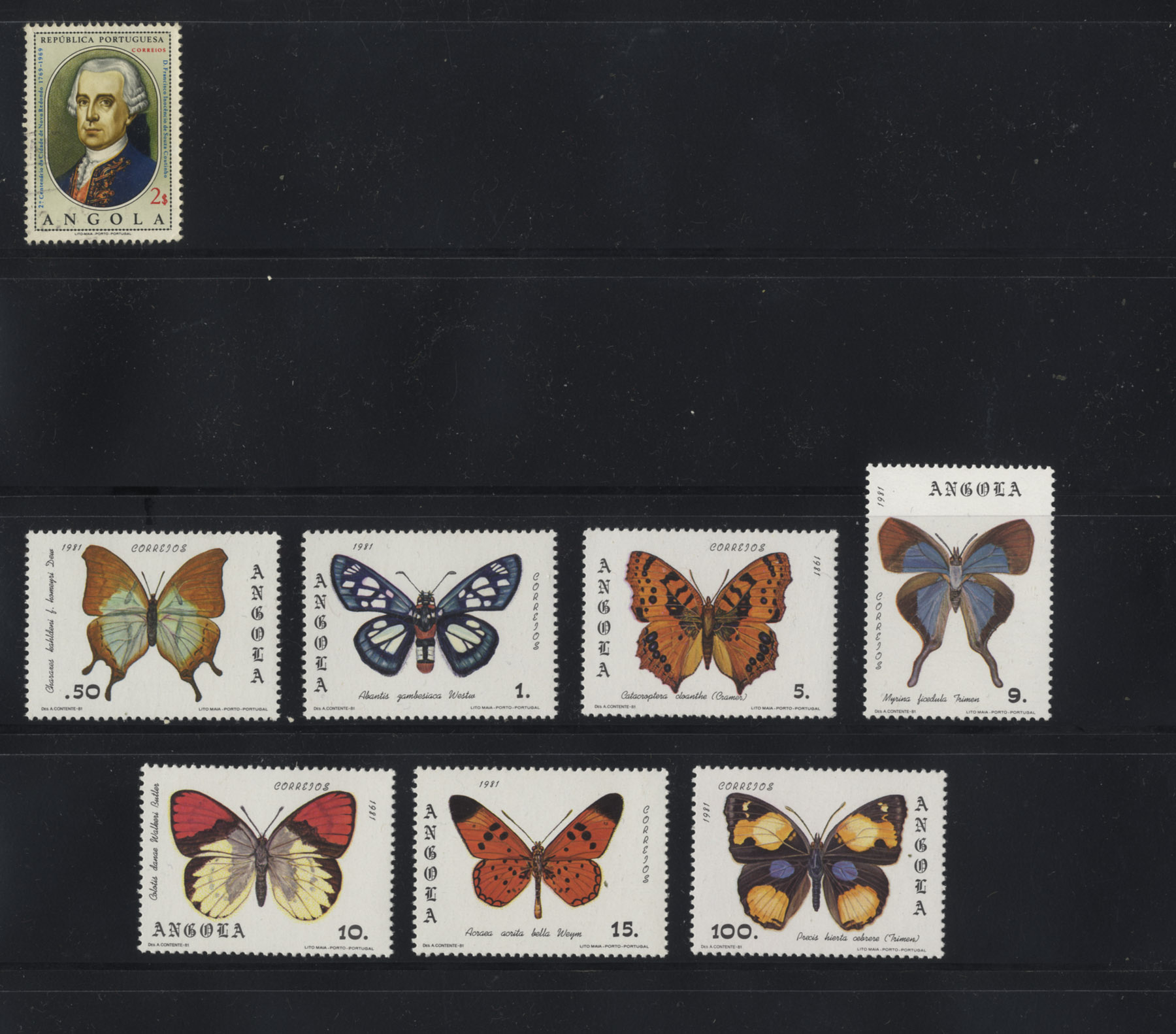
Angola's first commemorative stamps came in 1938, marking the visit of President António Óscar Carmona with three values showing a marble column topped by the Portuguese arms. A 1948 set of ten commemorated the 300th anniversary of the recovery of Angola. The most visually striking colonial issues are the 1951 definitives: 24 designs of native birds printed in full colour — 🦅 among the earliest Angolan stamps to break from the generic Portuguese colonial template and celebrate the country's own natural heritage. A companion set of 20 native animals followed in 1953.
After fourteen years of guerrilla war against Portuguese rule, Angola became independent on 11 November 1975. The first stamp of the new republic depicted a hand holding a rifle aloft before a star — a stark contrast to the birds and animals of the colonial era. ⭐ A civil war between rival factions then devastated the country for nearly three decades. For the collector, the Portuguese colonial period from 1870 to 1951 offers a coherent and historically rich sequence — the generic designs giving way to increasingly distinctive Angolan imagery, mirroring the slow and painful emergence of a nation's identity under colonial rule. 📯
— PORTUGUÊS — PORTUGUESE —
Angola 🌍 — Do Reino do Ngola aos Primeiros Selos
Angola tira o seu nome de ngola — o título dos reis do povo Ndongo, um reino Bantu nas terras altas entre os rios Kwanza e Lukala. Os navegadores portugueses chegaram pela primeira vez à costa angolana nos anos 1480 e, em 1575, haviam estabelecido um assentamento permanente em Luanda, que cresceria para se tornar um dos portos mais importantes do mundo atlântico — e o centro de um dos maiores comércios de escravos da história. 🚢 Durante três séculos, a presença portuguesa ficou largamente confinada à costa; foi apenas no final do século XIX, após a Conferência de Berlim de 1885 que formalmente dividiu África entre as potências europeias, que Portugal estendeu o controlo efetivo sobre o vasto interior.
Os primeiros selos de Angola surgiram em 1870: seis valores tipografados representando a coroa portuguesa, usando o mesmo design genérico partilhado por todas as colónias portuguesas da época. 📫 Novos valores e cores foram acrescentados periodicamente até 1885. Em 1886 vieram nove valores com uma silhueta em relevo do Rei Luís I, seguidos de retratos do Rei Carlos I em 1893 e 1898. A década após a queda da monarquia portuguesa em 1910 foi filatelicamente turbulenta — uma sucessão desconcertante de sobrecargas e surchargos aplicados aos stocks existentes, refletindo a instabilidade política da jovem república. A longa série Ceres de 1914, apresentando a deusa romana da agricultura, trouxe estabilidade e continuidade, com novos valores acrescentados até 1926 — 40 tipos no total, uma série reconhecível por qualquer colecionador de selos coloniais portugueses. ⭐
Os primeiros selos comemorativos de Angola surgiram em 1938, assinalando a visita do Presidente António Óscar Carmona com três valores mostrando uma coluna de mármore encimada pelas armas portuguesas. Uma série de dez em 1948 comemorou o 300.º aniversário da recuperação de Angola. As emissões coloniais visualmente mais marcantes são as definitivas de 1951: 24 designs de aves nativas impressas a cores integrais — 🦅 entre os primeiros selos angolanos a romper com o modelo genérico colonial português e a celebrar o próprio património natural do país. Uma série complementar de 20 animais nativos seguiu-se em 1953.
Após catorze anos de guerra de guerrilha contra o domínio português, Angola tornou-se independente a 11 de novembro de 1975. O primeiro selo da nova república representava uma mão erguendo um rifle diante de uma estrela — um contraste marcante com as aves e animais da era colonial. ⭐ Uma guerra civil entre facções rivais devastou então o país durante quase três décadas. Para o colecionador, o período colonial português de 1870 a 1951 oferece uma sequência coerente e historicamente rica — os designs genéricos dando lugar a imagens angolanas cada vez mais distintivas, espelhando o lento e doloroso surgimento da identidade de uma nação sob o domínio colonial. 📯
— UMBUNDU — OVIMBUNDU —
Angola 🌍 — Okambwa k'Ongola ku Vitiyo via Selos vya Okuandja Ouposi
Elińgu lyAngola liyandja ku ngola — etitulo lyovafumu v'Ondongo, okambwa k'Ovimbantu kombanda y'Osi oyo yali okutuvaela nopeke va omińga ya Kwanza na Lukala. Ovalisińgani v'Oluportugesu vafika okulisoka kw'Angola k'omimvo ya 1480, naovimbo 1575 va tumbulula ositala osiyapayapaye i Luanda — oyo yasoka kumba okuba ouposi okuvunda mu'nduli y'Osi i'Atlantiku napo yali olumbu lw'ukautu owovandu vahapanyikwa mefiti. 🚢 Omimvo yahatatu, Oluportugesu lwali okukalela olisoka; m'omimvo y'okuunguka k'oikumi y'omumvo 19 fimbo okutetelwa kw'Osi ya Berlin k'omumvo 1885 — oyo yavainda Afrika m'ovyanda vi'ovakoloni v'Ovilisańgani — lyo Oluportugesu lwakalaula c'oupangeli owetono ku'ombanda.
Vitiyo vya selos via okuandja ouposi v'Angola vyafika k'omumvo 1870: vitiyo vitano na vimue vyakandulwa vyondeko y'Oluportugesu, k'ombanda oyo yali ya kuvandwa ku vikoloni vyońge vi'Oluportugesu. 📫 Vitiyo vyonene na imbolondo vyayadiwa ku 1885. K'omumvo 1886 vyafika vitiyo vitevekite k'esindo lya Kalunga Luís I, naovimbo selos z'Okalunga Carlos I k'omimvo 1893 na 1898. Osi ya Ceres k'omumvo 1914 — i'okuńgalama k'omumvo 1926 — yatekela selos ozindji novitiyo 40 v'okucita — i ndyoka yayuka ku'muntu uńge u'selos z'ovikoloni vi'Oluportugesu. ⭐
Selos z'okulimbika zaokuńgalama v'Angola zafika k'omumvo 1938. Selos za vifulu v'ińoni z'Angola k'omumvo 1951 — vitiyo 24 — 🦅 zali mu'mbolondo z'okulembeka nazo zatetekela nombili z'Angola yońge kauliku kovakolombi. Angola yakala okuyapuka k'omumvo 1975 — omumvo 11 w'Owilwa. Selu yapanga y'Osi ya Lunda likuvela eyoko lyesuya na osungu — ekupuka lyakuvilila ku vitiyo v'ińoni n'onyama z'osi y'ovikoloni. ⭐ Ku'muntu u'selos, osi y'ovikoloni vi'Oluportugesu k'omimvo 1870 ku 1951 iyandja okupopya okwenene k'ombongo y'Angola — selos z'omuntwe z'ovikoloni zakavaita ku selos z'Angola yońge z'okutekela embo ly'ondaka y'omanu. 📯