— ENGLISH —
🏝 Haiti 🏝
🌍 Haiti is one of the most historically powerful names in Caribbean philately: the first Black republic, born from the Haitian Revolution, sharing Hispaniola with the Dominican Republic, and carrying a postal story shaped by independence, ports, foreign trade, political change, and repeated moments of national rebuilding.
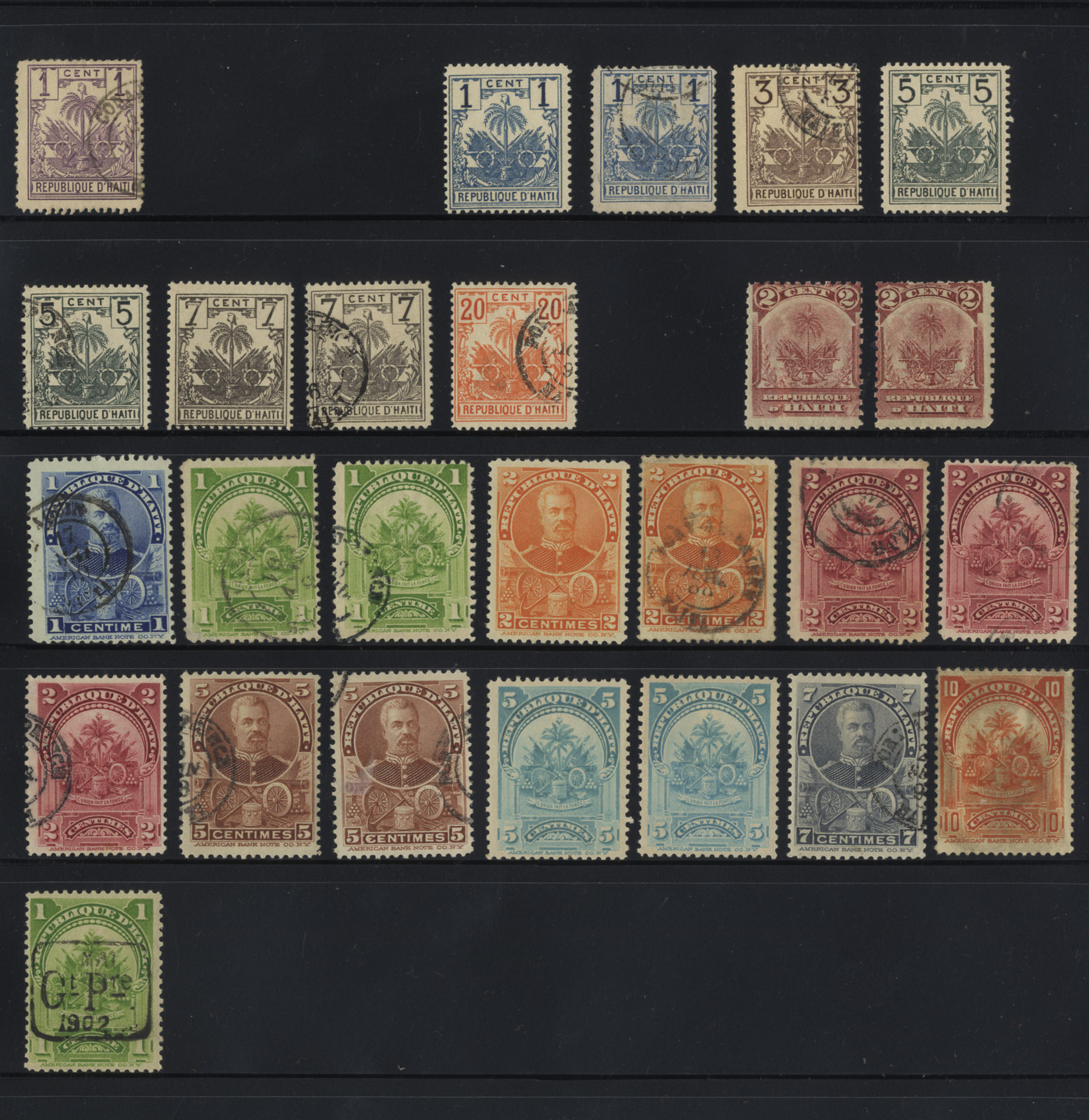
📯 The classic stamp period begins on 1 July 1881, the same date Haiti joined the Universal Postal Union. The first issue was the imperforate Liberty Head set, typographed in Paris by M. G. Richard on tinted paper, with values from 1 centime to 20 centimes. For specialists, these early stamps are not just attractive classics: paper tint, shade, plate position, perforation, and genuine cancellation all matter.
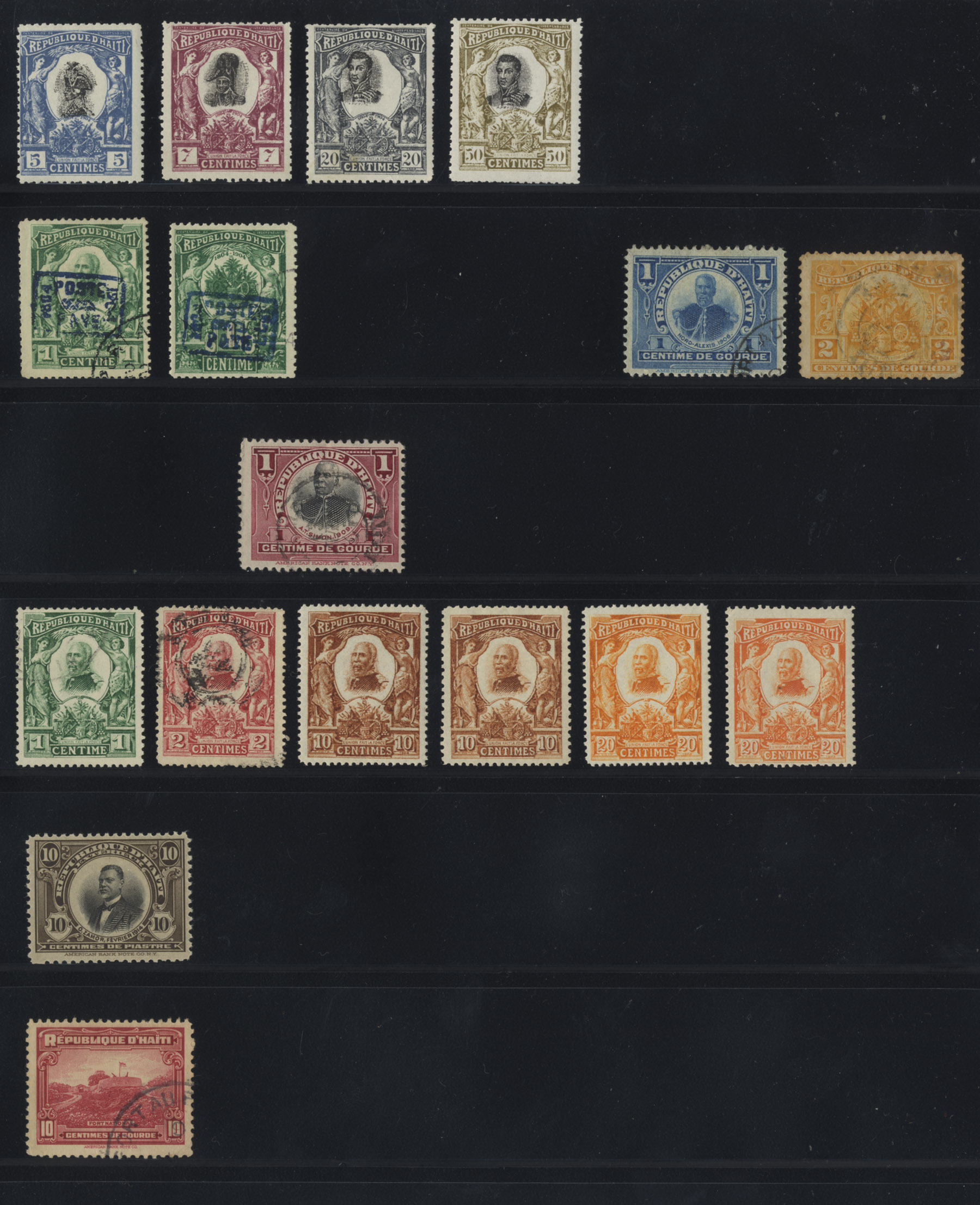
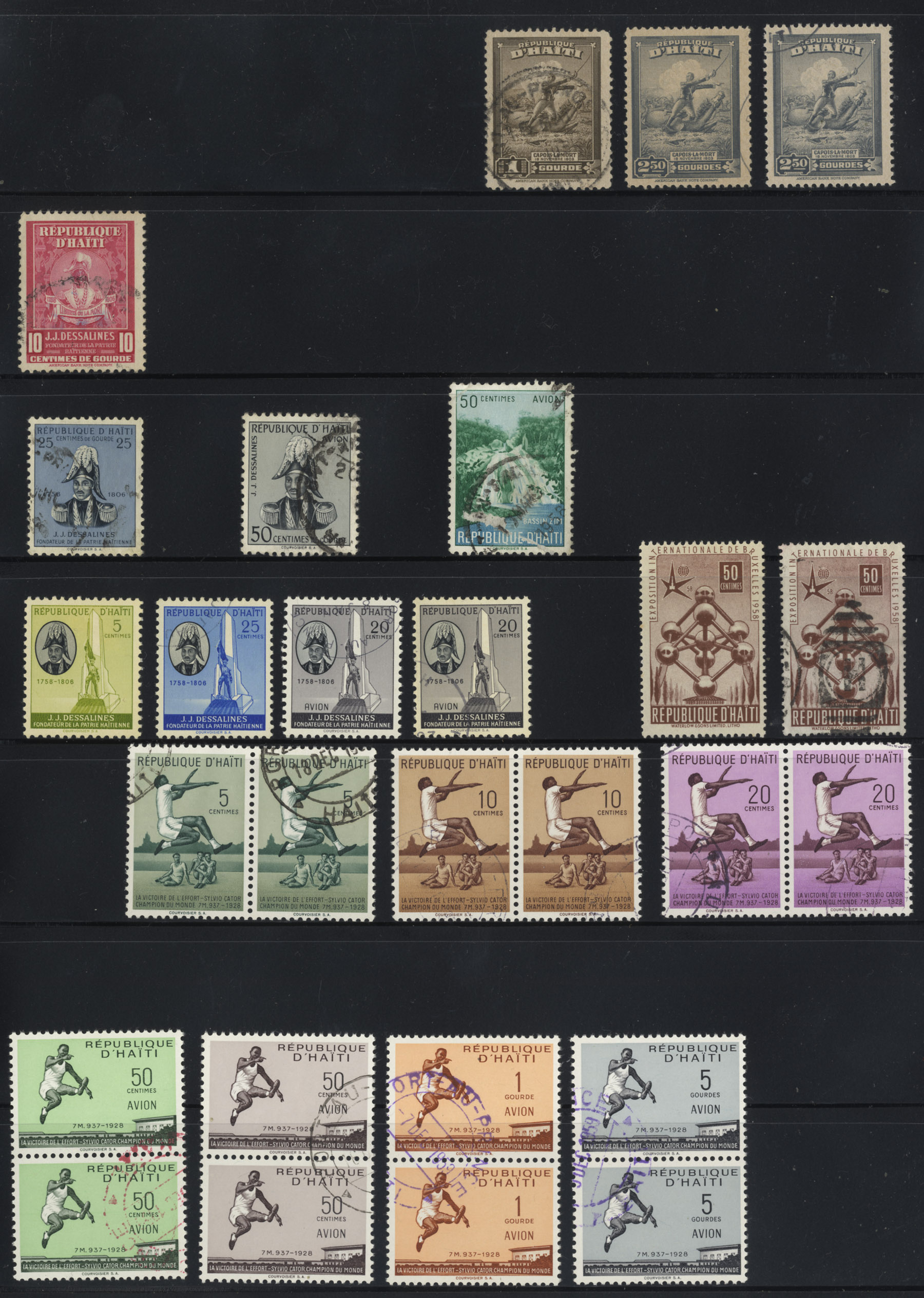
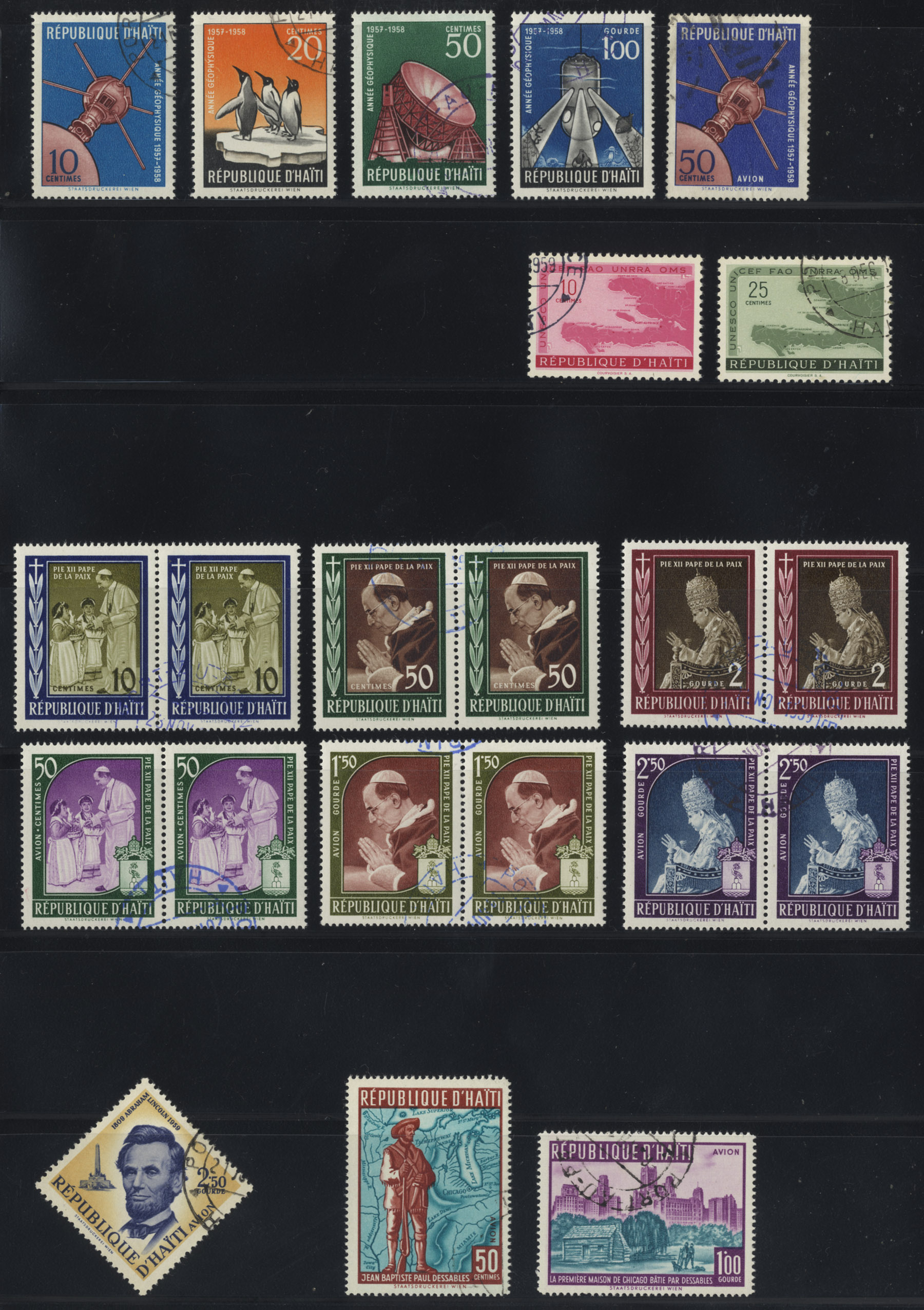
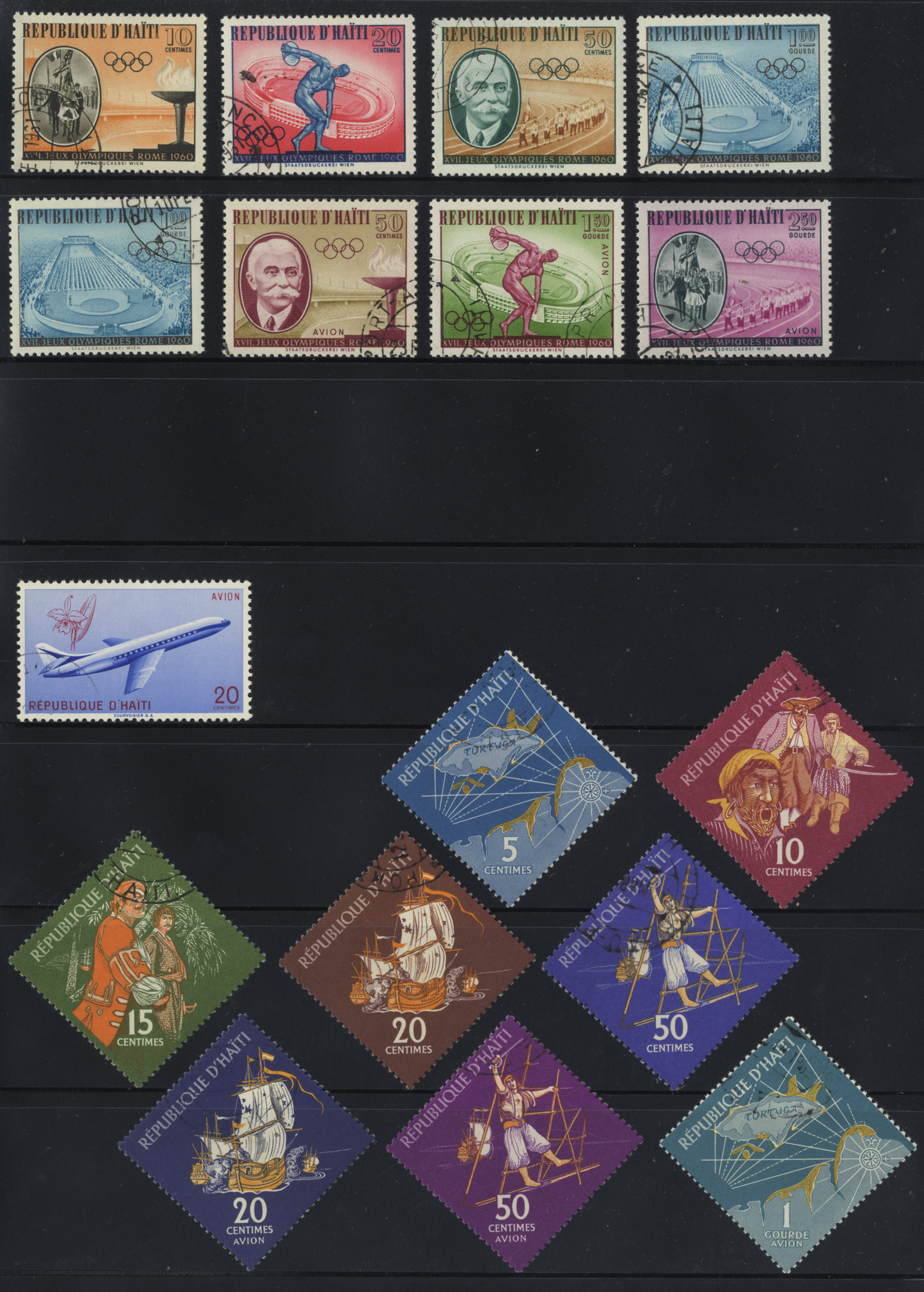
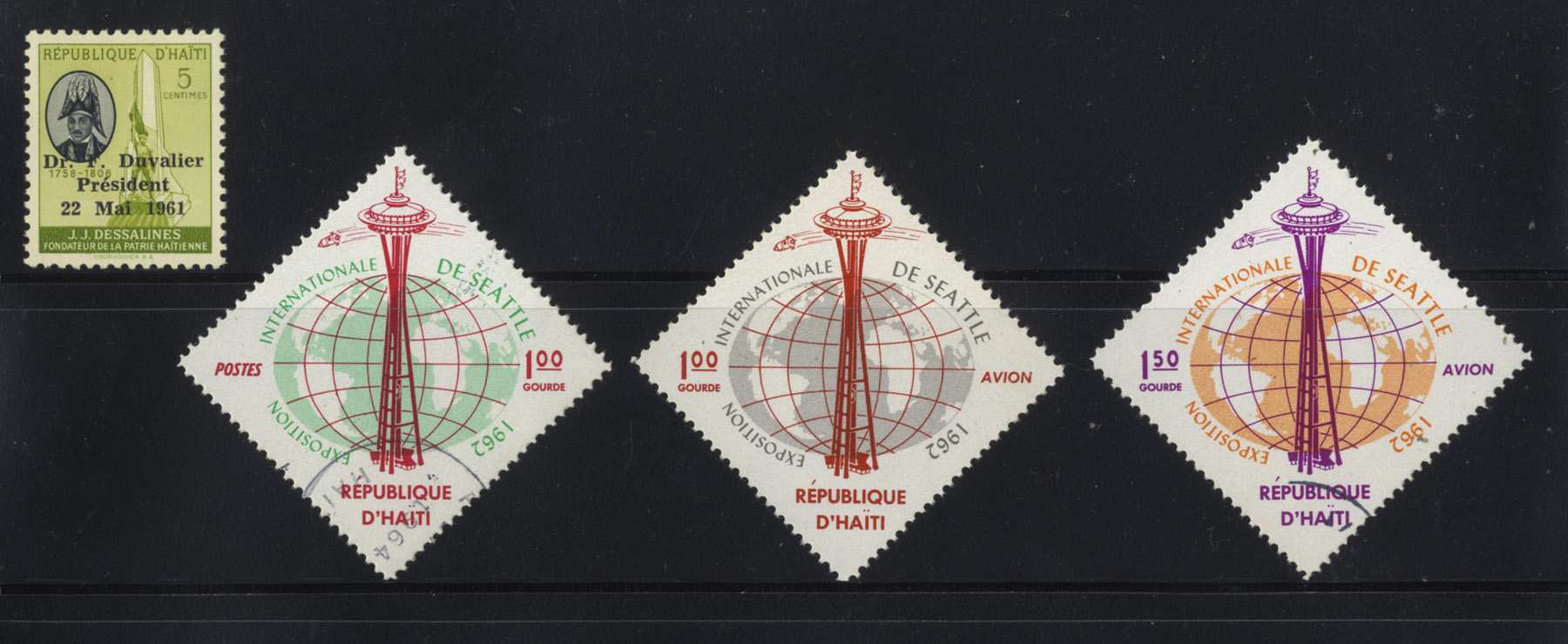
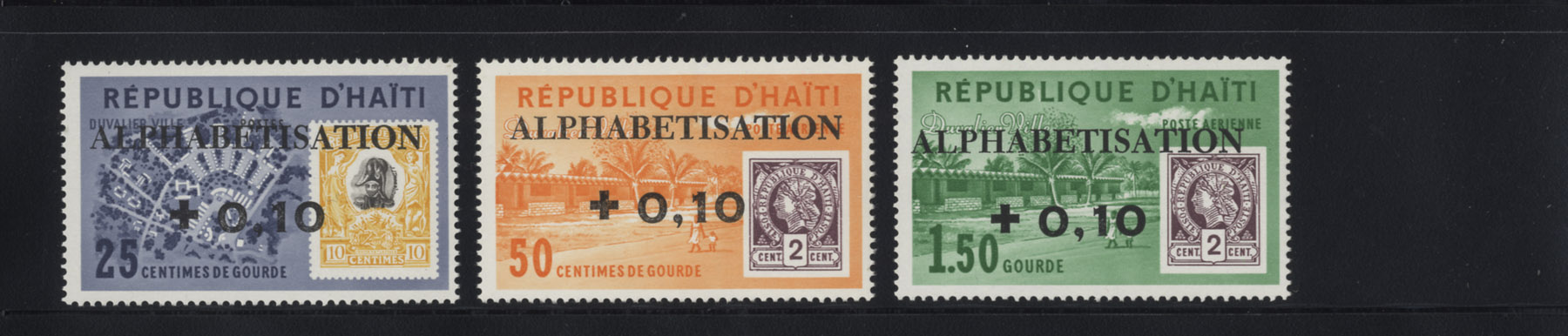
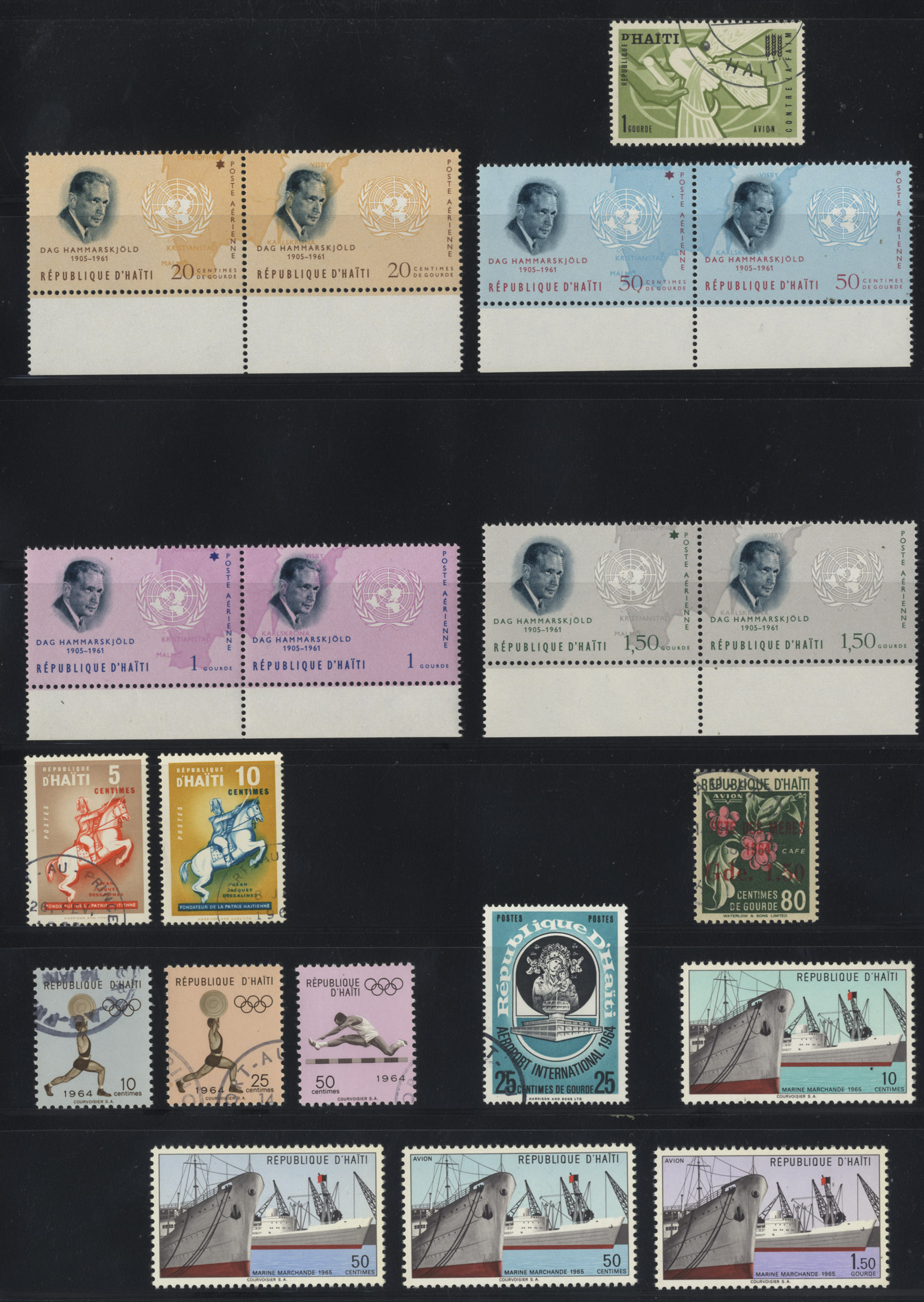
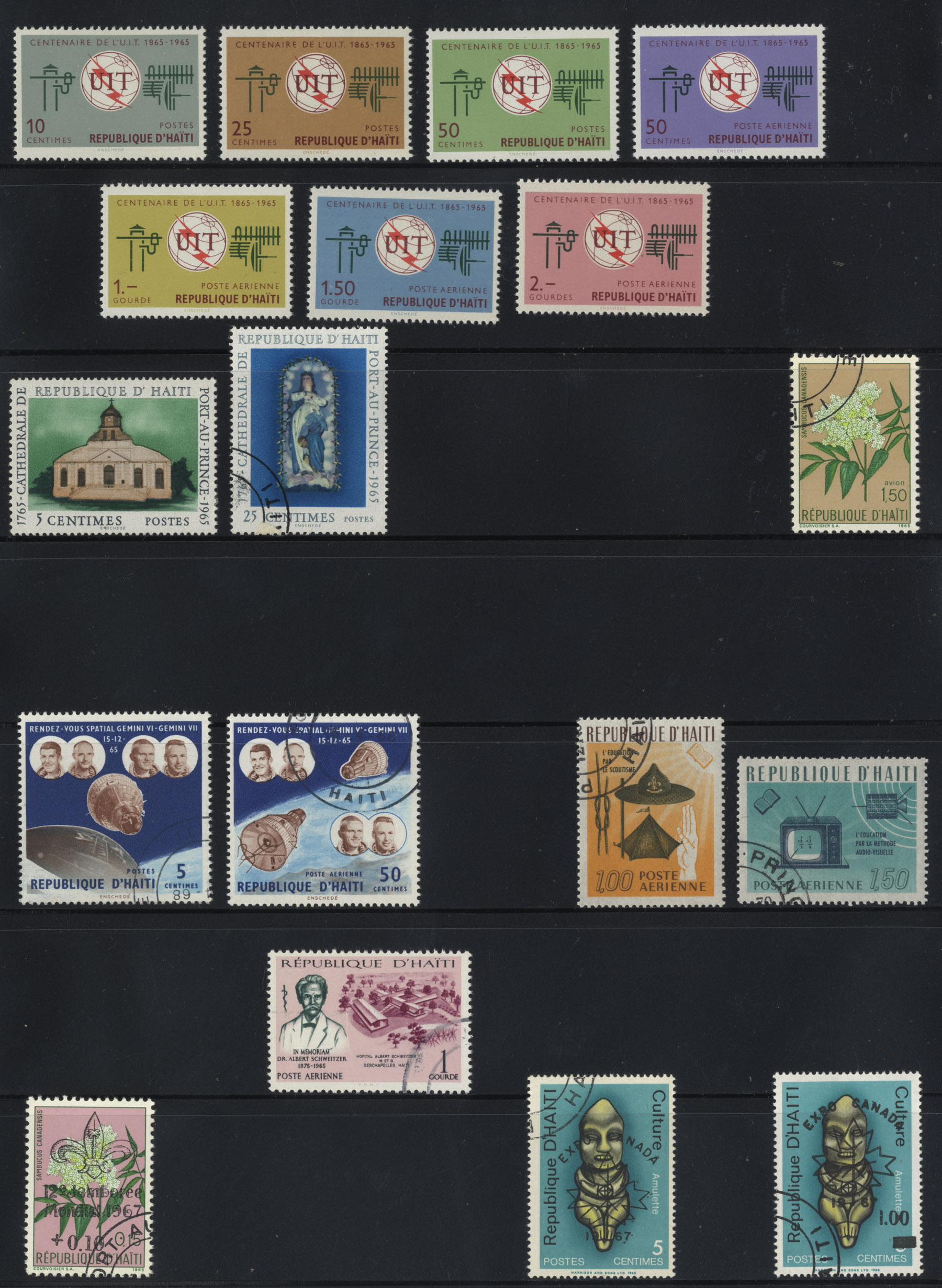
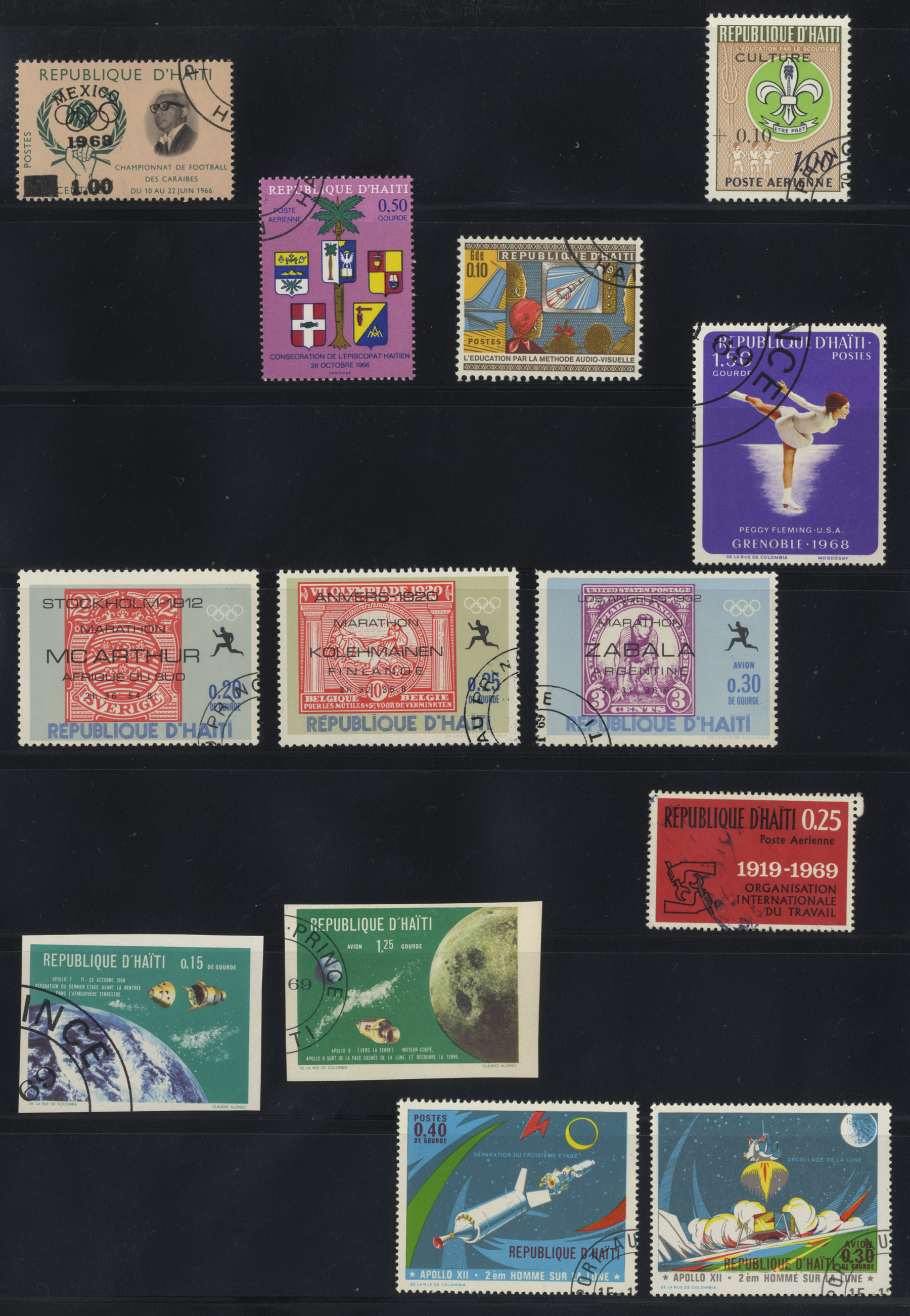
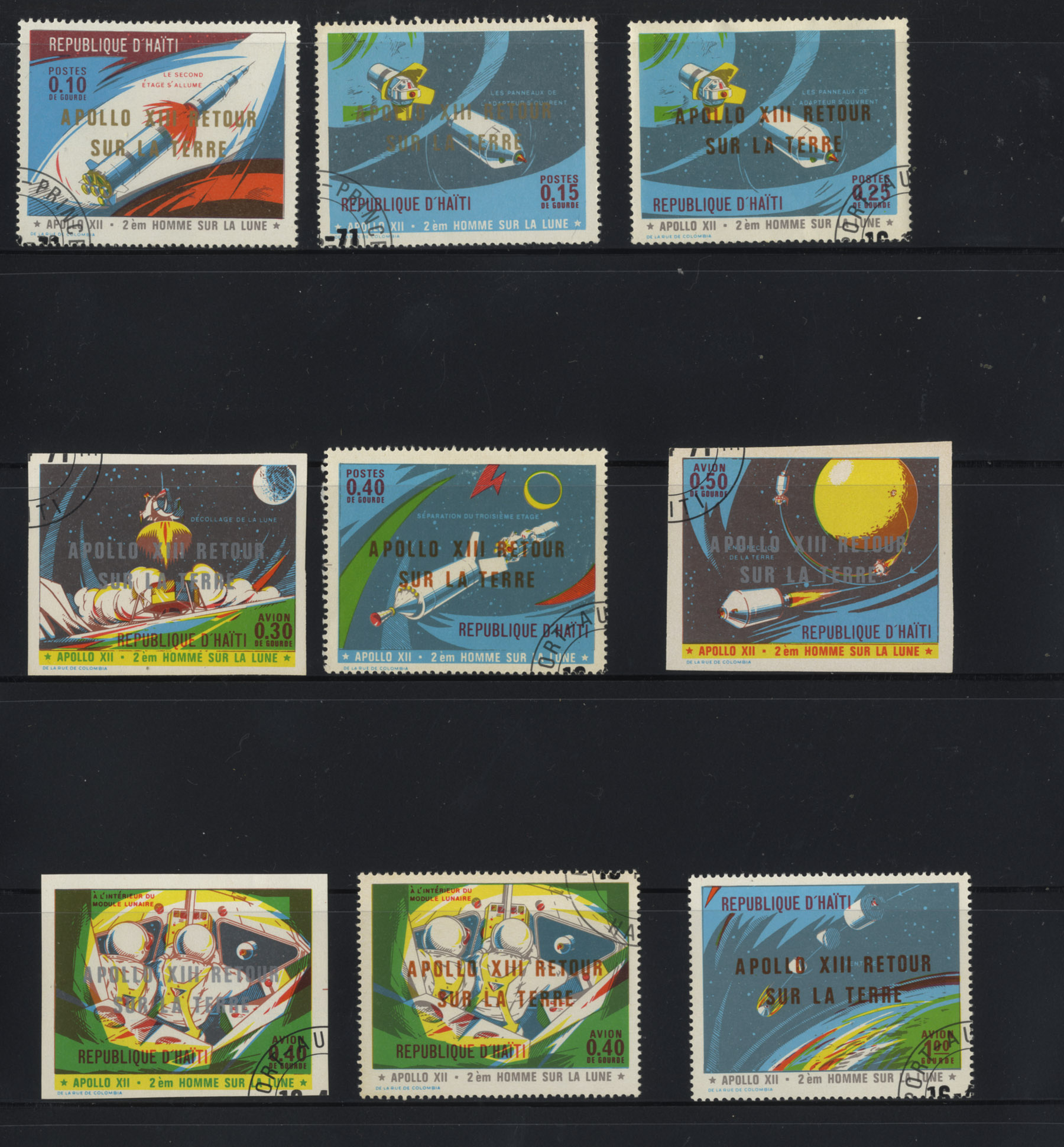
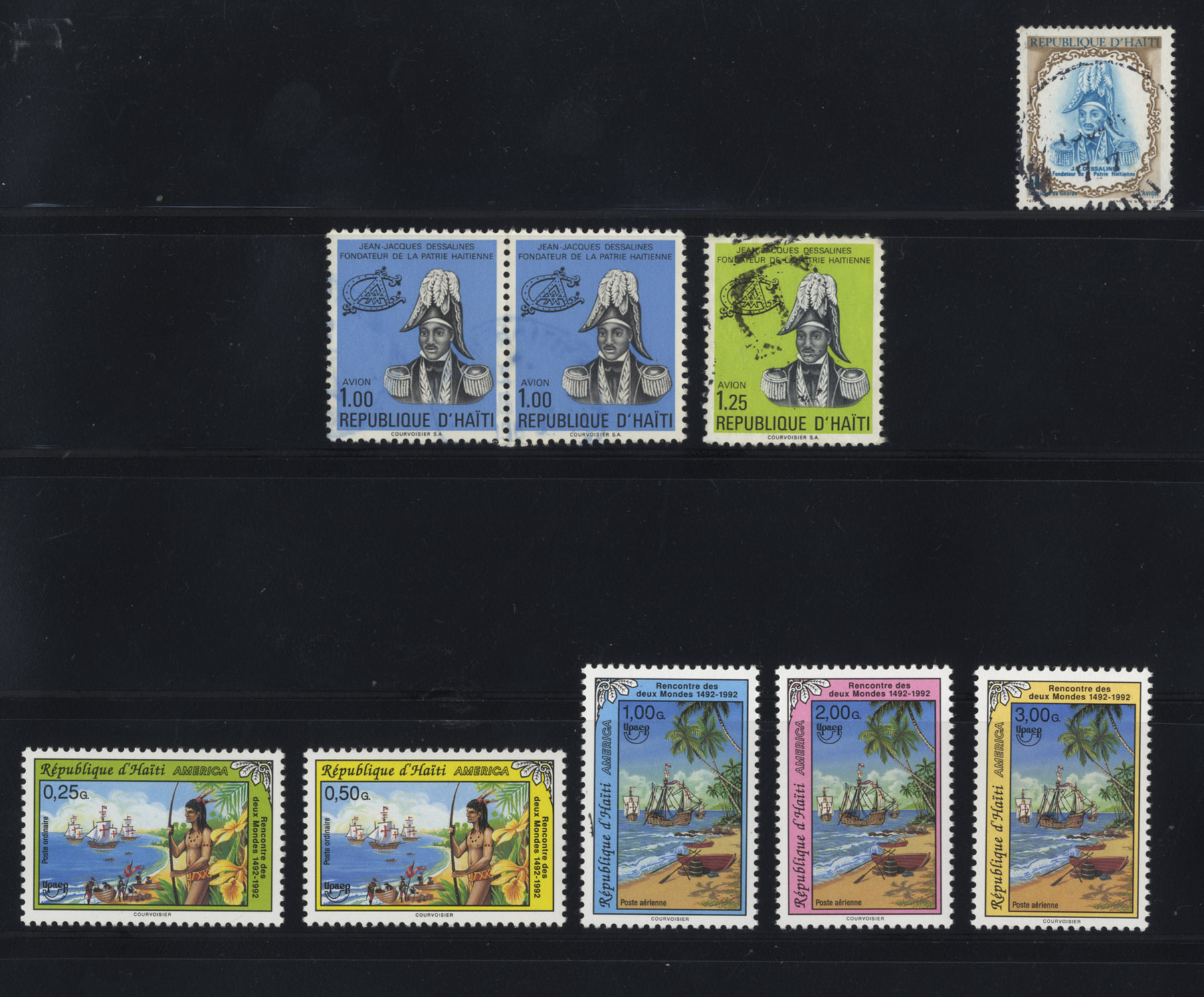
📫 Early Haitian collecting quickly becomes specialised. The Liberty Head issues are followed by coat-of-arms designs, presidents, provisional overprints, and the 1904 President Pierre Nord Alexis material, where originals, reprints, and overprint details can require close comparison. Later 20th-century Haiti also produced many colourful commemoratives, airmails, semi-postals, and topical sets, including material where CTO handling and imperforate varieties deserve careful checking.
⚔ Haiti is also rich in postal-history context. Covers, town cancels, port mail, air mail, disaster mail, and politically charged commemoratives often tell more than a loose stamp. The best pieces connect the stamp to a route, cancellation, period, or event — especially from the 1881 classics, the early 1900s provisional era, and the post-war period.
⭐ For collectors, Haiti is a compact but deep field: early Liberty Heads with plating potential, provisional and overprint studies, historically meaningful presidents and national symbols, plus modern topical material that must be separated carefully between genuinely postal use, CTO, reprint, and philatelic production.
— FRANÇAIS —
🏝 Haïti 🏝
🌍 Haïti occupe une place très forte dans la philatélie des Caraïbes : première république noire, née de la Révolution haïtienne, partageant l’île d’Hispaniola avec la République dominicaine, avec une histoire postale marquée par l’indépendance, les ports, le commerce international, les changements politiques et les reconstructions nationales.
📯 La période classique commence le 1er juillet 1881, date à laquelle Haïti adhère à l’Union postale universelle. La première émission est la série non dentelée à la tête de la Liberté, typographiée à Paris par M. G. Richard sur papier teinté, avec des valeurs de 1 centime à 20 centimes. Pour le spécialiste, la teinte du papier, la nuance, la position de planche, la dentelure et l’oblitération authentique sont essentiels.
📫 La collection d’Haïti devient vite très spécialisée. Aux têtes de la Liberté succèdent les armoiries, les présidents, les surcharges provisoires et les timbres du président Pierre Nord Alexis de 1904, pour lesquels originaux, réimpressions et détails de surcharge doivent être comparés avec soin. Au XXe siècle, les nombreuses commémoratives, postes aériennes, semi-postales et thématiques demandent aussi de distinguer usage postal réel, CTO, non dentelés et productions philatéliques.
⚔ L’histoire postale haïtienne est particulièrement riche. Les plis, oblitérations de villes, courriers de ports, premiers courriers aériens, plis de catastrophe et émissions à contexte politique racontent souvent plus qu’un timbre isolé. Les meilleures pièces relient le timbre à une route, une oblitération, une période ou un événement.
⭐ Pour les collectionneurs, Haïti est un domaine compact mais profond : têtes de la Liberté avec possibilités de planchage, études de surcharges, symboles nationaux, présidents historiques et matériel moderne qu’il faut examiner attentivement entre usage postal, CTO, réimpression et production philatélique.
— KREYÒL AYISYEN — HAITIAN CREOLE —
🏝 Ayiti 🏝
🌍 Ayiti gen yon plas ki gen anpil fòs nan filateli Karayib la: premye repiblik nwa a, ki soti nan Revolisyon Ayisyèn nan, sou menm zile Ispanyola ak Repiblik Dominikèn. Istwa lapòs li mare ak endepandans, pò maritim, komès lòt bò dlo, chanjman politik, ak plizyè peryòd kote peyi a te rebati tèt li.
📯 Peryòd klasik la kòmanse 1 jiyè 1881, menm jou Ayiti antre nan Inyon Postale Inivèsèl la. Premye seri a se te timb Tèt Libète yo, san dan, enprime an tipografi nan Pari pa M. G. Richard sou papye tente, ak valè ki soti nan 1 santim rive 20 santim. Pou moun ki etidye yo seryezman, koulè papye, nuans, pozisyon sou plak, dan, ak anilasyon ki vrèman postal gen anpil enpòtans.
📫 Koleksyon Ayiti a vin espesyalize byen vit. Apre Tèt Libète yo vini desen ak zam peyi a, prezidan yo, surcharge pwovizwa, ak materyèl Prezidan Pierre Nord Alexis 1904 la, kote orijinal, re-enprime, ak detay surcharge mande bon konparezon. Nan 20yèm syèk la, Ayiti bay anpil timb komemoratif, avyon, semi-postal, ak sijè popilè; kolektè dwe veye diferans ant itilizasyon postal reyèl, CTO, varyete san dan, ak materyèl ki fèt sitou pou filateli.
⚔ Istwa lapòs Ayiti rich anpil tou. Anvlòp, anilasyon vil, kourye pò, premye kourye avyon, kourye dezas, ak emisyon ki gen sans politik souvan rakonte plis pase yon timb pou kont li. Pi bon pyès yo montre ki wout kourye a te pran, ki kote li soti, ki epòk li reprezante, oswa ki evènman li mare avè l.
⭐ Pou kolektè yo, Ayiti se yon domèn ki pa twò gwo men ki pwofon: Tèt Libète yo ka etidye pa plak, surcharge yo gen anpil ti detay, senbòl nasyonal yo gen anpil istwa, epi materyèl modèn nan bezwen bon je pou separe itilizasyon postal, CTO, re-enprime, ak pwodiksyon filatelik.