— ENGLISH —
🏜 The Independent Postal Era of Abu Dhabi 🏜
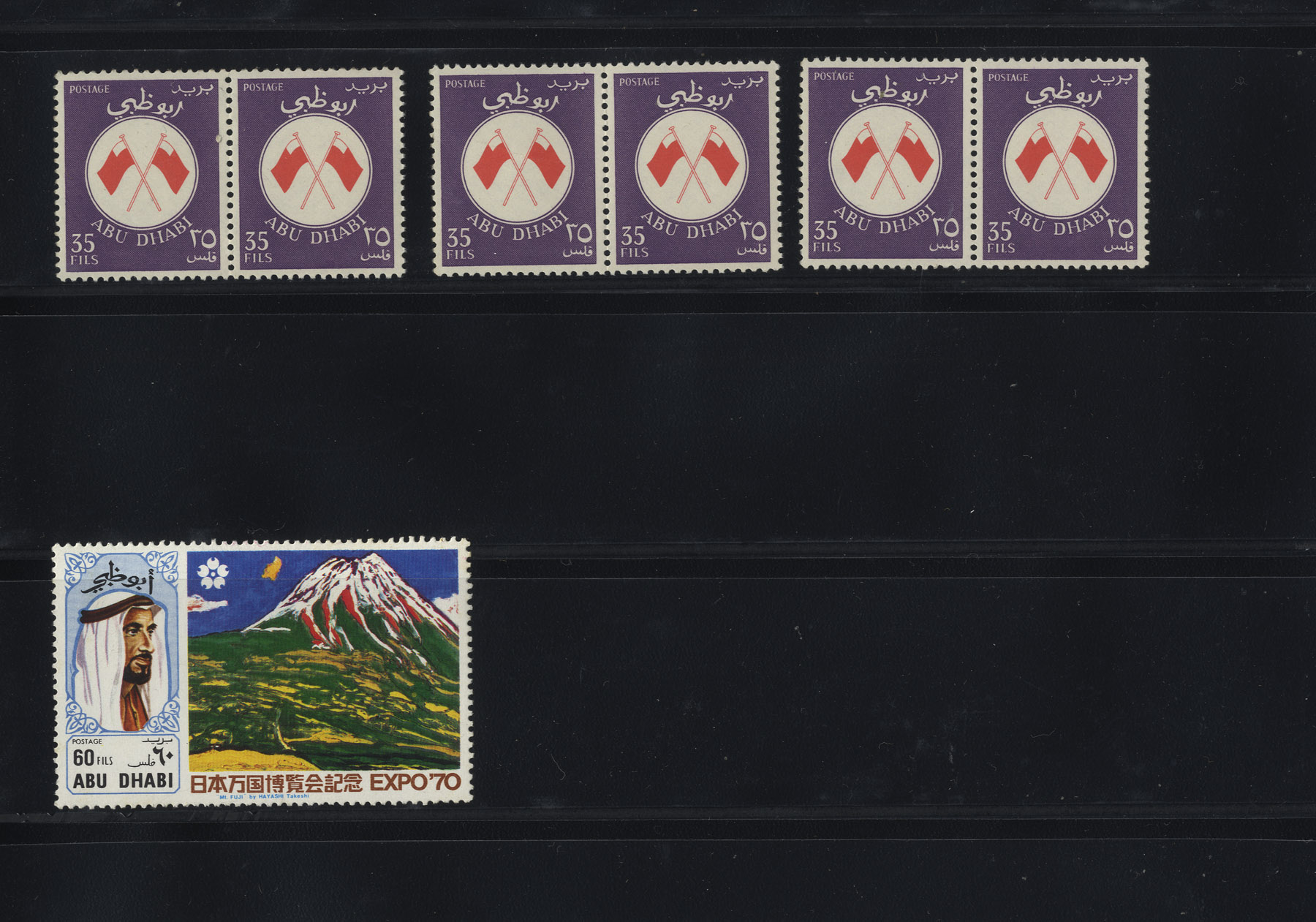
🏰 Prior to 1964, mail originating from Abu Dhabi was handled by British postal agencies using British stamps overprinted with local currency values. As the emirate's oil wealth grew, it sought greater autonomy and established its own independent postal administration.
📯 In March 1964, Abu Dhabi issued its very first definitive stamp series. These early stamps prominently featured the portrait of Sheikh Shakhbut bin Sultan Al Nahyan alongside iconic local scenes, such as the Al Maqta Fort and native gazelles. Following the accession of Sheikh Zayed bin Sultan Al Nahyan in 1966, new definitive series were introduced bearing his likeness, coinciding with a currency transition from the Gulf Rupee to Fils and Dinars.
⭐ The independent postal history of Abu Dhabi concluded in 1972, shortly after the formation of the United Arab Emirates. The emirate's stamps were subsequently replaced by issues representing the unified nation, making this brief eight-year window a highly specialized and captivating era for Middle Eastern philately.
— العربية — ARABIC —
🏜 الحقبة البريدية المستقلة لأبوظبي 🏜
🏰 قبل عام 1964، كانت الوكالات البريدية البريطانية تتولى إدارة البريد الصادر من أبوظبي باستخدام طوابع بريطانية موشحة بقيمة العملات المحلية. ومع نمو الثروة النفطية للإمارة، سعت أبوظبي لتحقيق استقلالية أكبر وأسست إدارتها البريدية الخاصة.
📯 في مارس 1964، أصدرت أبوظبي أول مجموعة طوابع اعتيادية خاصة بها. وقد برزت في هذه الطوابع المبكرة صورة الشيخ شخبوط بن سلطان آل نهيان إلى جانب مناظر محلية شهيرة، مثل قلعة المقطع والغزلان. وبعد تولي الشيخ زايد بن سلطان آل نهيان مقاليد الحكم في عام 1966، تم إصدار مجموعات جديدة تحمل صورته، وتزامن ذلك مع تغيير العملة من الروبية الخليجية إلى الفلس والدينار.
⭐ انتهى التاريخ البريدي المستقل لأبوظبي في عام 1972، بعد فترة وجيزة من تأسيس دولة الإمارات العربية المتحدة. حيث تم استبدال طوابع الإمارة بإصدارات تمثل الدولة الموحدة، مما يجعل هذه الفترة القصيرة التي استمرت ثماني سنوات حقبة متخصصة وجذابة للغاية في هواية جمع الطوابع في الشرق الأوسط.